
Home | Category: Desert Animals
JERBOAS

From animalfact:com
Jerboas are hopping desert rodents found throughout North Africa, the Middle East and Central Asia that belong to the family Dipodidae. They tend to live in hot deserts, are generally nocturnal and can move very quickly. When chased, jerboas can run or hop at up to 24 km/h (15 mph). Most species of jerboas have excellent hearing that they use to locate prey and to avoid becoming prey themselves to predators such as little owls. The typical lifespan of a jerboa is around two to three years. [Source: Wikipedia]
Jerboas feed on insects, seeds, and succulent vegetation. In many ways they are remarkably similar to the kangaroo rats (Heteromyidae) of North America. Both have greatly inflated bullae; a very long tail, often tipped black and white; fused or nearly fused cervical vertebrae; and soft, silky fur, usually pale in color. They both employ leaping locomotion that utilizes their enlarged and powerful hind feet. This is a type of movement is found in many desert rodents and is thought to be beneficial because, although it often wastes energy, it allows an animal to move quickly, change direction rapidly, and even jump up to avoid predators like snakes. This is important in desert environments where there is little cover. [Source: Sharon Jansa, Janae Chavez, Phil Myers, Animal Diversity Web (ADW) /=]
Jerboas are also similar to kangaroos. Again both have long hind legs, short forelegs, and long tails. Jerboas move around in a similar way as kangaroos — hopping — however, the anatomy of jerboas is more adapted to erratic hopping locomotion, making use of sharp turns and great vertical leaps to confuse and escape predators, rather than for sustained hopping over long periods of time, which is what kangaroos are good at. Researchers have found that, when jerboas execute their vertical leaps, the primary tendons in the hindlimbs only recovered and reused on average 4.4 percent of energy contributed to the jump — lower than many hopping animals.
Jerboas are generally quiet, although some species tap with their hind fwwt. They move about by walking or hopping on their hind legs. Their forelimbs are used for gathering food. Jerboas may move using all four limbs when hopping or jumping to escape predators. Some jerboas hibernate through the winter and some enter torpor during hot or dry periods.
Jerboas are designed for jumping. Their hind limbs are at least four times as long as their front legs and their fused bone structure gives them greater leverage for making long and high leaps. Metatarsal (foot) bones in the hind feet are fused into one "cannon bone" with the first and fifth toes missing. Undersides of the three remaining long toes are laterally compressed. The combination of these features improves traction and provides powerful leverage, allowing them to jump to heights of nearly 2.25 meters when escaping predators . Jerboas that live in sandy areas have fur made up of stiff hairs on the undersides of their feet, which gives the animal greater traction on the loose sand. The front limbs are not used for locomotion; instead, they are employed in the gathering of food and for burrowing. [Source: Sharon Jansa and Phil Myers, Animal Diversity Web (ADW) /=]
RELATED ARTICLES:
EGYPTIAN JERBOAS: GREATER, LESSER, CHARACTERISTICS, BEHAVIOR africame.factsanddetails.com
JERBOAS OF CENTRAL ASIA: CHARACTERISTICS, BEHAVIOR, SPECIES factsanddetails.com
PYGMY JERBOAS (WORLD'S SMALLEST RODENTS): CHARACTERISTICS, BEHAVIOR, SPECIES factsanddetails.com
HAMSTERS: TAXONOMY, CHARACTERISTICS, BEHAVIOR factsanddetails.com
HAMSTER SPECIES IN EURASIA: EUROPEANS, ROBOROVSKIS, CAMPBELL'S DWARVES factsanddetails.com
GOLDEN (SYRIAN) HAMSTERS: CHARACTERISTICS, BEHAVIOR, DISCOVERY, DOMESTICATION africame.factsanddetails.com
MOUSE-LIKE HAMSTERS: CHARACTERISTICS, SPECIES, BEHAVIOR, AND REPRODUCTION factsanddetails.com
GERBILS: CHARACTERISTICS, BEHAVIOR AND REPRODUCTION factsanddetails.com
GERBIL SPECIES IN ASIA: MONGOLIAN, GREAT, INDIAN factsanddetails.com
GERBILS OF THE MIDDLE EAST AND NORTH AFRICA africame.factsanddetails.com
JIRDS: CHARACTERISTICS, BEHAVIOR, SPECIES AND REPRODUCTION africame.factsanddetails.com
Dipodoidea
Dipodoidea is the superfamily of rodents, also known as dipodoids, to which jerboa belong. Found across the Northern Hemisphere, this superfamily includes more than 50 species among the 16 genera in three families — jerboas (family Dipodidae), jumping mice (family Zapodidae), and birch mice (family Sminthidae). Different species are found in grassland, deserts, and forests. They are all capable of saltation (jumping while in a bipedal stance), a feature that is most highly evolved in the desert-dwelling jerboas. Formerly, Dipodoidea contained only a single large family, Dipodidae, which contained jerboas, jumping mice, and birch mice as subfamilies. However, phylogenetic evidence found all three to be distinct families from one another.
Fossil dipodids are known from the Oligocene Period (33 million to 23.9 million years ago). Despite the remarkable similarity of some dipodids and heteromyids (kangaroo rats) , these two families are no believed to be especially closely related, and the affinities of the dipodids are not known. /=\

Euphrates jerboa in Saudi Arabia
Dipodoids are small to medium-sized rodents, with a head and body length ranging from 4 to 26 centimeters (1.6 to 10.2 inches). They are all adapted for jumping, although to varying degrees. Jerboas have very long hind legs which, in most species, include cannon bones. They move either by jumping, or by walking on their hind legs. Jumping mice have long feet, but lack the extreme adaptations of the jerboas, so that they move by crawling or making short hops, rather than long leaps. Both jerboas and jumping mice have long tails to aid their balance. Birch mice have shorter tails and feet, but they, too, move by jumping.
Most dipodoids are omnivorous, with a diet consisting of seeds and insects. Some species of jerboa, however, such as Allactaga sibirica, are almost entirely insectivorous. Like other rodents, they have gnawing incisors separated from the grinding cheek teeth by a gap, or diastema. The dental formula of dipodids is 1/1, 0/0, 1-0/1-0, 3/3 = 18 or 16.
Euphrates Jerboa
Euphrates jerboas (Scarturus euphraticus or Allactaga euphratica) live in lowland grasslands, shrublands, mountains, semi-deserts, desert steppes and hot deserts in Pakistan, Afghanistan, Iran, Iraq, Jordan, Kuwait, Saudi Arabia, Syria, and southeastern Turkey. Where their territory overlaps with that of lesser jerboas (Pygeretmus pumilio), Euphrates jerboas are less common. Although Euphrates jerboas normally lives at or below 1000 meters above sea level, they can be found as high as 2500 meters on Ararat Mountain (8202 feet). The longest-living Euphrates jerboa lived in captivity for four years and two months. Lifespan in the wild is unknown, although it is likely that most mortality occurs during the first year of life. [Source: Sarah Hodgson, Animal Diversity Web (ADW) /=]
Euphrates jerboas live in burrows in rocky areas of mountain foothills or valleys near places with abundant vegetation, and are also found near agricultural areas, where there is lots of food in the form of seeds. These burrows are straight, 1.2 to 1.7 meters long and 45 to 70 centimeters (17.7 to 27.5 inches) deep. The entrance to the burrow is nine to 12 centimeters (3.5 to 4.7 inches) in diameter. There is usually only one jerboa living in each burrow, with the exception of mothers with young. Individuals build their burrows far from other jerboas. During late spring and summer the burrows are closed with a soil plug to keep the heat out and the moisture in. Some Euphrates jerboas use the burrows of other animals instead of building their own. Euphrates jerboas in the Ararat and Diabarskaja valleys use the burrows of mid-Asian gerbils. Those in the Leninakan uplands use the burrows of sousliks.

Euphrates jerboa in Saudi Arabia
On the International Union for Conservation of Nature (IUCN) Red List, Euphrates jerboas are listed as Near Threatened. In CITES (Convention on International Trade in Endangered Species of Wild) they have no special status. They are threatened by loss of habitat and desert reclamation projects. Euphrates jerboas are regarded as crop pests. They like to eat the seeds inside melons so they will dig to the middle to get them, destroying the melon in the process. Related species with similar feeding habits — jumper jerboas (Allactaga sibirica) — have completely destroyed a cucumber plantation in one night.
Although evidence is sparse it is believed to be that Euphrates jerboas are preyed by nocturnal hunters such snakes, owls, weasels and foxes. These jerboas escape predation mainly through their agility and speed. They are capable of large leaps, both horizontally and vertically, can leap into bushes. Their coats blend in well with their environments, making them difficult to see in their desert habitats.
Euphrates Jerboa Characteristics and Diet
Euphrates jerboas on average weigh 35.9 grams (1.27 ounces) and have a head and body length that ranges from 23 to 31 centimeters (9 to 12.2 inches). Like other jerboas, they have very large hind feet and small forelimbs. The length of their feet is usually 5 to 6 centimeters (2 to 2.4 inches). Ther tail is 14.4 to 19.5 centimeters (5.7 to 7.7 inches) long. Euphrates jerboas use their long tails for balance when jumping and to help prop them up when standing up. Sexual Dimorphism (differences between males and females) is not present: Both sexes are roughly equal in size and look similar. [Source: Sarah Hodgson, Animal Diversity Web (ADW) /=]
Euphrates jerboas have tall, narrow rabbit-like ears, measuring from 2.7 to 4.2 centimeters (1.2 to 1.7 inches) . There are tufts of hair around the openings of their ears that help keep sand out. A distinguishing characterizic of the genus Allactaga is that, while they have five toes, two of them on each of their feet are vestigial and are found high up on the hind foot. The hind feet also have tufts of hair on the bottom to provide traction in the sand All Euphrates jerboas have well-developed whiskers
Euphrates jerboas have furry coats with either red and black upper parts and white underparts or sandy colored upper parts and white under parts, depending on the color of the soil where they are found. All Euphrates jerboas have one white stripe on their hips. They also have black and white tufts of fur on the ends of their tails. These tufts are often used by individuals while bounding to signal to other jerboas. Euphrates jerboas living at higher elevations tend to have darker coats than those at lower elevations..
Euphrates jerboas mostly eats seeds and the underground parts of plants. They usually forage at least 0.25 kilometers from their burrows. In the wild, Euphrates jerboas do not need free water to drink as they all the water they need from from the plants they eat. In captivity, they do drink free water and tend to choose grains over juicy plants. They like to dig holes in melons to get to the seeds in the middle. /=\
Euphrates Jerboa Behavior and Reproduction
Euphrates jerboas are fossorial (engaged in a burrowing life-style or behavior, and good at digging or burrowing), saltatorial (adapted to leaping), nocturnal (active at night), motile (move around as opposed to being stationary), sedentary (remain in the same area), hibernate (the state that some animals enter during winter in which normal physiological processes are significantly reduced, thus lowering the animal’s energy requirements) and solitary. Their average territory size is about one hectare (2.5 acres). Small groups of Euphrates jerboas are known to live in plots of 10 to 20 hectares, with the average density working out to one jerboa per hectare. Euphrates jerboas sense and communicate with vision, touch, sound and chemicals usually detected by smelling. They use the black and white tufts of fur on their tail to signal to other jerboas, possibly to warn them of perceived dangers. [Source: Sarah Hodgson, Animal Diversity Web (ADW) /=]
Euphrates jerboas have great agility, speed and leaping ability, which are all use to escape from predators. When alarmed or stimulated, they jump off their hind legs into the air. When relaxed, Euphrates jerboas walk slowly, bipedally. They use their smaller forelimbs to move dirt out of the way while they dig their burrows with their teeth. Many members of genus Allactaga build both a permanent burrow and several temporary ones. The temporary burrows are shorter and often simpler than the permanent ones. They also dig separate burrows for nesting.
Euphrates jerboas living in valleys usually hibernate during the winter from late October to late February. However, if the winter is mild, many populations will not hibernate. Among small five-toed jerboas, adult males begin hibernating first. They have more fat than adult females. The last to begin hibernation, are young females. During hibernation ambient temperate is two to three degrees Celsius or lower. During thaws,small five-toed jerboas wake up from hibernation.
Euphrates jerboas engage in seasonal breeding and may have two to three litters per year during a Breeding season that lasts from May to October. Young are altricial, meaning that they are born relatively underdeveloped. Parental care is provided by females. The number of offspring ranges from two to 8, with the average number of offspring being five. Young Euphrates jerboas are nursed and cared for by their mother in her den until they are independent.
There is not much information regarding reproduction of Euphrates jerboas. What little research has been done is based on the capture of pregnant females at different times of the year. Based on this research, it appears that these jerboas have a very long breeding season. It is thought that a long breeding season is an adaptation to the harsh climate in which they live. Euphrates jerboa young open their eyes at the age of two weeks. The young of small five-toed jerboas spend 30 to 35 days with their mother and are mature by 3.5 months. Those of great jerboas spend 1.5 months with their mother and do not breed until their second year. Female jerboas have been known to care for the young of other jerboas. /=\
Four-Toed Jerboa
four-toed jerboa
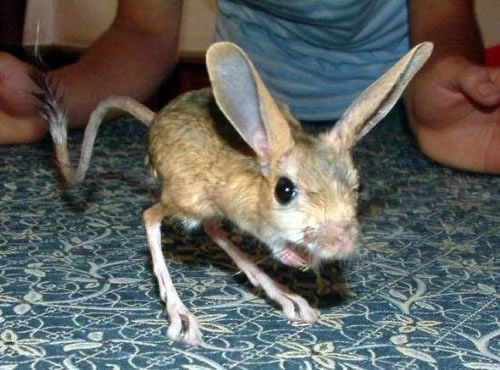
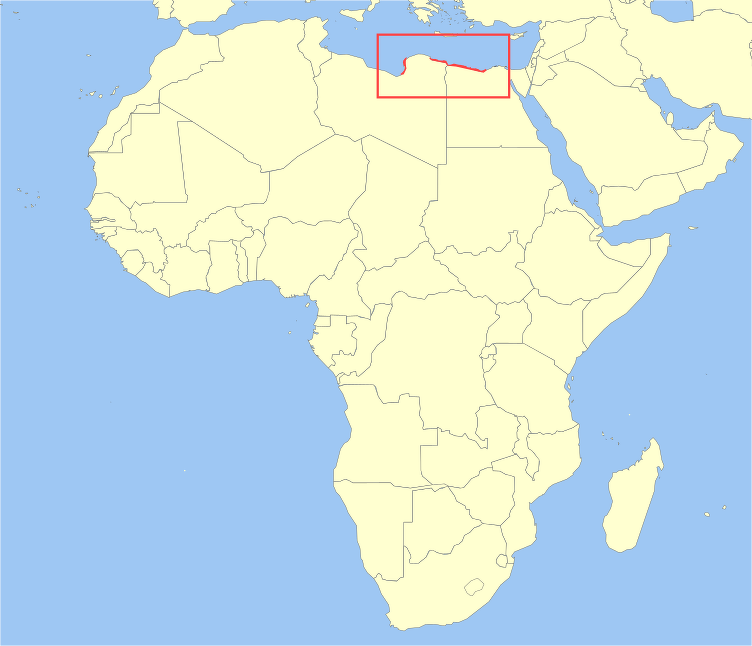
Four-toed jerboa (Scarturus tetradactylus or Allactaga tetradactyla) live in coastal salt marshes and dry deserts in Egypt and Libya. They occupies four different kinds of simple burrows: 1) temporary summer day burrows for hiding during the day, 2) temperate summer night burrows for hiding during the night, 3) permanant summer burrows used as a home for producing young, and 4) permanent winter burrows for hibernation. Most of these burrows are only 60 to 150 centimeters (two to five feet) deep. All burrows have side tunnels emerging at the surface, through which a jerboa can escape if they are threatened by a predator. Four-toed jerboa often lines their nests with camel hair or their own belly hair . [Source: Kelly Sims, Animal Diversity Web (ADW) /=]
On the International Union for Conservation of Nature (IUCN) Red List four-toed jerboa they are listed as Vulnerable. In CITES (Convention on International Trade in Endangered Species of Wild) they have no special status. They are considered to be at very high risk of extinction due to habitat loss and restricted range. The lifespan of four-toed jerboa is less than two years. Four-toed jerboa's basal metabolic rate is 68 percent less than that of the white rat. A temperature increase of 40 degrees C (104 F) kills white rats but only causes sleeping jerboas to salivate
Four-toed jerboa on average weigh 52 grams (1.83 ounces) and have head and body length of 9 to 26.3 centimeters (3.5 to 10.3 inches) and their tail length is approximately 14.2 to 30.8 centimeters (5.6 to 12.1 inches) They have long, slender ears that are approximately the same length as their head., and large eyes that help them see at night. Their hind legs are four times greater than their front legs, as is true of other jerboas. The three main footbones in their hind legs are fused into a single "cannon bone," which provides mechanical advantage for jumping .
Four-toed jerboas are the only jerboas that have four toes — hence their common name. They only have one small lateral digit; other jerboa species have either two outer toes or none at all). The soles of their hind foeet have tufts of stiff hairs, which acts as a steering mechanism while they leap and provides traction in the sand and helps them to kick sand backwards when they are burrowing. Tuft of hair on the ear openings helps keepi wind-blown sand out the ears. Padded feet help absorb and cushion the the shock of landing. Their long tail balances the animal while resting and jumping, and also acts as a brake during running. The vertebrae of the neck region are short and expanded, and several are fused together. Jerboas have inflated bullae and the cheek teeth are rooted, high crowned and cuspidate . They have velvety hair that is usually the same color as the sand they burrow in (sandy or greyish) and a white underbelly. /=\
Four-toed jerboas feed primarily on seeds and succulent vegetation (especially plants with milky juices), but it also has been known to feed on insects. They do not drink water; they live on metabolic water (produced by the chemical breakdown of food) . /=\
Four-Toed Jerboa Behavior and Reproduction
range of four-toed jerboa
Four-toed jerboas are motile (move around as opposed to being stationary) and are primarily nocturnal (active at night), but has been known to leave the burrow before sunset to feed. When these jerboa leave their burrows in the hot summer, they often plug the opening to keep the heat out and moisture in. This behavior maintains a suitable climate in its quarters during extremely hot times of the year.
If it is too hot or too cold outside, four-toed jerboas they go into deep torpor, either estivating during hot or dry periods in the summer or hibernating for five months during the cold winter. During hibernation, and sleeping periods, they lie on their side in order to accommodate their long legs. Jerboas walk with a slow bipedal movement, but when they are escaping from predators they leap in a zig zag pattern and can cover one to three meters in a single jump . /=\
Little is known about the reproductive behavior of four-toed jerboa except that there is a long breeding season with peaks in spring, summer, and fall. During this period, males playfully chases female until they stops briefly and copulation occurs. During the mating dance, males smack females on the snout, encircle them and challenge them to take the mating position Sexual maturity in jerboa is reached after the first year. The gestation period ranges from 25 to 42 days . There are an average of three annual litters with three to five per litter; but as high as eight and as low as one.
Greater Egyptian Jerboa
Greater Egyptian jerboa (Jaculus orientalis) are found across North Africa — in Morocco, Algeria, Tunisia, Libya, and Egypt. They are especially common in Egypt and their range extends east through Sinai and into southern parts of Israel; formerly, the species inhabitated areas of Saudi Arabia. Greater Egyptian jerboas lives in humid coastal and salt semi-deserts and in subtropical shrubland, including rocky valleys and meadows. They are also found in barley fields of the semi-nomadic Bedouin tribes. The lifespan of Greater Egyptian jerboas in the wild is unknown; however, the offspring of a pregnant female captured for a study lived for over six years in captivity.

Greater Egyptian jerboa
Greater Egyptian jerboas are occasionally found in pet markets and they are said to have a tame disposition and manageable size. They are sometimes regarded as a crop pests. They are fond of barley and on occasion raid Bedioun agricultural fields. Greater Egyptian jerboas have been hunted by Bedouins for meat and fur, used as trim, and because they are considered pests. To capture them Bedouin pour water into their burrows, forcing the animals to run out. They also dig up burrows, and set traps by burrow openings.
On the International Union for Conservation of Nature (IUCN) Red List they are listed as a species of Least Concern. In CITES (Convention on International Trade in Endangered Species of Wild) they have no special status. They are regarded as crop pests and their main negative impact on humans is crop damage. In 1996, Greater Egyptian jerboas was designated as 'Lower Risk/Near Threatened' on IUCN Red List. In 2004, the species was re-assessed and was given a 'Least Concern' designation, meaning they are widespread and abundant.
See Separate Article: EGYPTIAN JERBOAS: GREATER, LESSER, CHARACTERISTICS, BEHAVIOR africame.factsanddetails.com
Lesser Egyptian Jerboas
Lesser Egyptian jerboas(Jaculus jaculus) live North Africa, the Middle East, Arabia and some parts of Central Asia in countries such as Sudan, Israel, and Morocco. The species is especially common in Egypt — one reason for its common name, Lesser Egyptian jerboas lives in desert and semi-desert areas that can be sandy or stony. They can also be found in less numbers in rocky valleys and meadows.[Source: Theresa Keeley, Animal Diversity Web (ADW) /=]
Lesser Egyptian jerboas have a lifespan in the wild of three to four years and have lived up to 6.4 years in captivity. Efforts have been made to bred them in captivity but these efforts have been unsucesssful due to lack of maternal care. However, captured young jerboas have been successfully tamed and kept as pets.

Lesser Egyptian jerboa on the Red Sea Coast, Saudi Arabia
On the International Union for Conservation of Nature (IUCN) Red List, lesser Egyptian jerboas are listed as a species of Least Concern. In CITES (Convention on International Trade in Endangered Species of Wild) they have no special status. Some people eat jerboas for food. Their greatest threat is loss of habitat, still their populations seem healthy largely as a result of living in places where humans don’t go or are few in number.
Known predators of lesser Egyptian jerboas include pallid foxes, Nile foxes, striped weasels, moila snakes and saw-scaled vipers. The main defenses that lesser Egyptian jerboas have against predator is their speed and agility. They can hop very fast and make large leaps and can move in an erratic and unpredictable way. Individuals often run escape into their burrows or any nearby cover or holes they can find. They do not bite often when handled, and do not seem to have any real means of defense against predators if caught.
See Separate Article: EGYPTIAN JERBOAS: GREATER, LESSER, CHARACTERISTICS, BEHAVIOR africame.factsanddetails.com
Image Sources: Wikimedia Commons
Text Sources: Animal Diversity Web animaldiversity.org ; National Geographic, Live Science, Natural History magazine, CNTO (China National Tourism Administration) David Attenborough books, New York Times, Washington Post, Los Angeles Times, Smithsonian magazine, Discover magazine, The New Yorker, Time, BBC, CNN, Reuters, Associated Press, AFP, Lonely Planet Guides, Wikipedia, The Guardian, Top Secret Animal Attack Files website and various books and other publications.
Last updated May 2025