
Home | Category: Desert Animals
VENOMS OF VENOMOUS SNAKES IN THE MIDDLE EAST
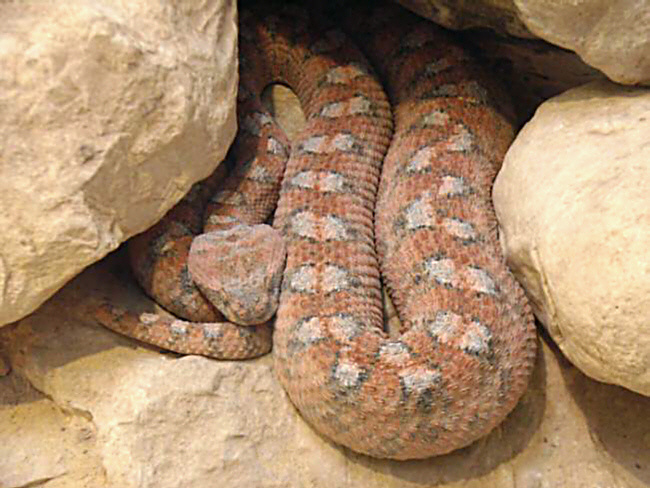
Arabian viper
There are two main kinds of venomous snake in the Middle East and North Africa: Vipers and cobras. A) Viper Identification: 1) Long, hinged fangs that tuck into roof of mouth when not in use, especially true in vipers; 2) Vertically elliptical eye pupils (pit vipers have a heat sensing organ between their eyes and nostrils)’ 3) Broad triangular head very distinct from narrow neck. B) Cobra Identification: 1) Short fangs fixed in erect position in front of mouth; 2) Round eye pupils. 3) Head small and not distinct from the body. [Source: United States Army, Center for Health Promotion and Preventive Medicine (USACHPPM), Entomological Sciences Program, Aberdeen Proving Ground, Md 21010-5403]
Bites by venomous (poisonous) snakes can result in a wide range of symptoms, from simple puncture wounds to life-threatening illness and death. There are two types of venom: neurotoxins and hemotoxins. All snake venom has both neurotoxins and hemotoxins in it, but some snakes have more neurotoxic venom and others have more hemotoxic venom. There are antivenoms (antivenins) to treat mot but not all snake venoms. [
There are antivenoms to treat the symptoms of the venom of cobras, pit vipers as well as most species of vipers found in Southwest Asia. There are no antivenins for sea snakes or mole vipers. Bites by cobras are immediately painful and tender to touch. Specific symptoms of cobra bites include drowsiness, difficulty in speaking, drooling, blurred vision, shortness of breath and loss of consciousness. These symptoms can occur within one hour after the bite. In more severe bites, a person can stop breathing within minutes. Death of tissue at the bite site is quite common.
The venom of vipers and pit vipers causes pain, blistering, bleeding, and destruction of tissue around the bite wound. Viper and pit viper bite victims may bleed from the bite site or bleed from the mouth or old wounds. Viper, mole viper and pit viper bite victims may experience nausea, vomiting, belly pain and sweating. Liver damage and gangrene may occur. Death from shock can occur soon after a severe bite.
Foreign companies involved in operating or constructing in the Middle East are told to have agreements with local hospitals that hold antivenom and that they have adequate supplies of antivenom and that it meets minimum company standards. Alternatively and probably preferably, antivenom should be stocked on company site and staff trained to administer.Additional controls should be in place to protect employees such as ensuring PPE (personal protective equipment) is provided, HSE (health, safety, and environment) induction training is provided that deals with working and regular checks are in place to ensure no snakes are in the vicinity of the work area.
RELATED ARTICLES:
VENOMOUS SNAKES: VENOM, PHYSIOLOGY, DEADLIEST SPECIES factsanddetails.com
SNAKES: HISTORY, CHARACTERISTICS, LARGEST, SENSES, FEEDING, BREEDING factsanddetails.com
Vipers in the Middle East
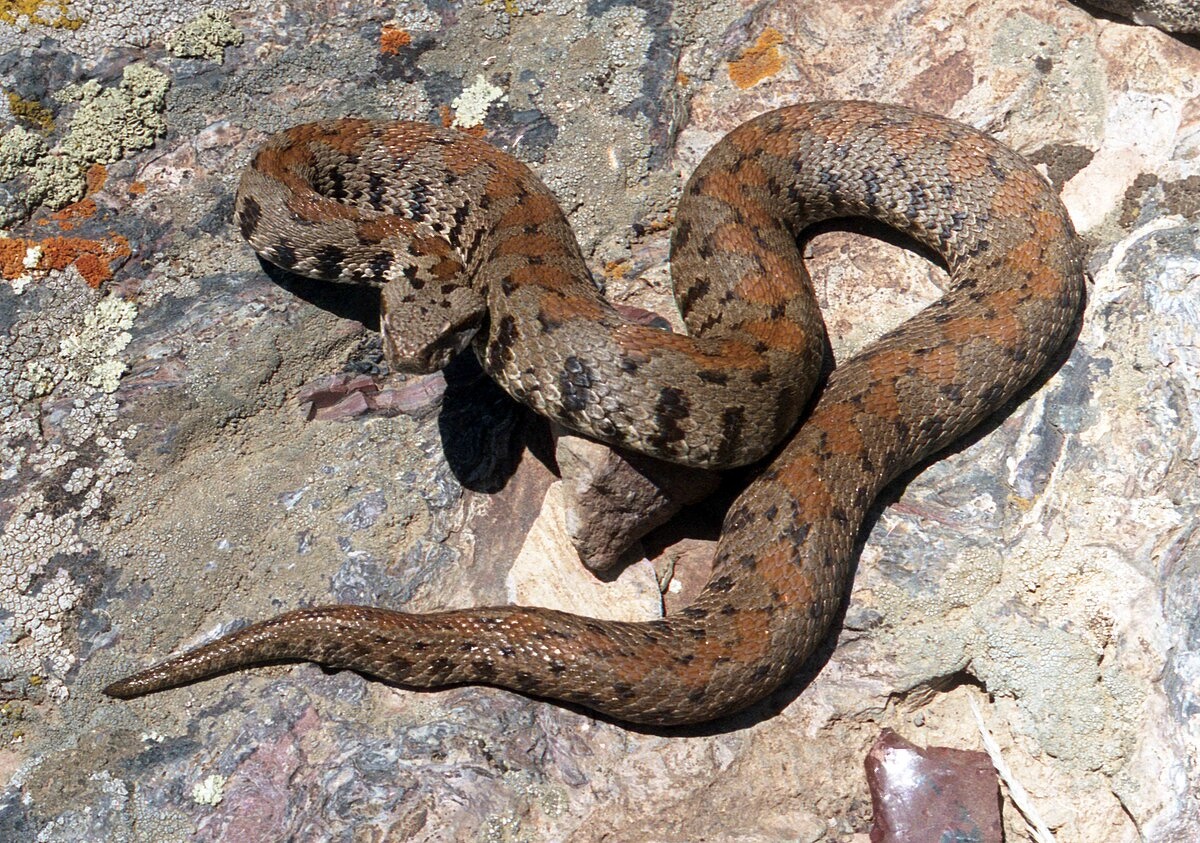
Radde’s Rock Viper
Vipers are regarded as the most highly evolved of all snakes. Other snakes have more potent toxins than vipers but vipers have longer fangs and a better system for delivering poisons deep into the victims flesh plus a spade-shaped head able to accommodate the large venom glands. There are about 40 species of true vipers. Among them are the common adder of Europe, the puff adder and horned viper of northern Africa, the sand viper, and rattlesnakes of the Americas. With the exception of one African species all true vipers give birth to live young.
Vipers have enlarged fangs that spring up when the viper opens its mouth and point forward, ideal for inflicting a bite. They can also make their upper jaws which holds the fangs stand up. This springs the fangs close to the victims. This allows them to strike prey and recoil and track down the prey later and avoid being injured by claws or teeth in a fight.
Arabian Vipers (Echis coloratus) live in dry rocky areas and deserts and scrub forests as high as 2,500 meters (8,200 feet) but not in sandy deserts. They are also known painted saw-scaled vipers, painted carpet vipers, Burton's carpet vipers, Palestine saw-scaled vipers, Arabian saw-scaled vipers, and Mid-East saw-scaled vipers. They are highly venomous and endemic to the Middle East and Egypt. They grow to a maximum total length of 75 centimeters (30 inches). They occur in Egypt east of the Nile and in the Sinai Peninsula as well as the Negev in Israel, Palestine's West Bank region, and Jordan. On the Arabian Peninsula they have been recorded in Western Saudi Arabia, Yemen, and Southern Oman.[Sources: Wikipedia United States Army, Center for Health Promotion and Preventive Medicine] Lebanese Vipers (Vipera bornmuelleri) inhabit rock covered hillsides, cedar forests, and meadows in high mountain areas in Israel, Lebanon, and Syria. Also known as Lebanese mountain vipers and Bornmueller's viper, they grows to a maximum total length of about 75 centimeters (30 inches), but usually much less. Their preferred natural habitats are cedar forest, shrubland, and alpine grassland.
Radde’s Rock Vipers (Montivipera raddei, Vipera raddei) reside in rocky areas and farmlands in eastern Turkey, northwestern Iran, Armenia, Azerbaijan, and probably Iraqi Kurdistan. Also known as the Armenian vipers, rock vipers, Radde's mountain vipers, Kurdistan vipers, (Vipera raddei kurdistanica), Armenian mountain vipers, Armenian mountain adders and Zanjhani vipers, they are endemic to which stretch across Kurdistan in Iran, Iraq, and southeastern Turkey. Adult males have a maximum total length of 99 centimeters (39 inches). Adult females are smaller with a maximum total length of 79 centimeters (31 inches). Radde’s rock vipers are closely related to Montivipera r. albicornuta and M. latifii; together they sometimes form the Montivipera raddei complex. There are two subspecies: the nominate from Armenia, Azerbaijan, eastern Turkey, northwest Iran, and adjacent Turkmenistan, and M. r. kurdistanica from southeast Turkey and adjacent Iraq and Iran.
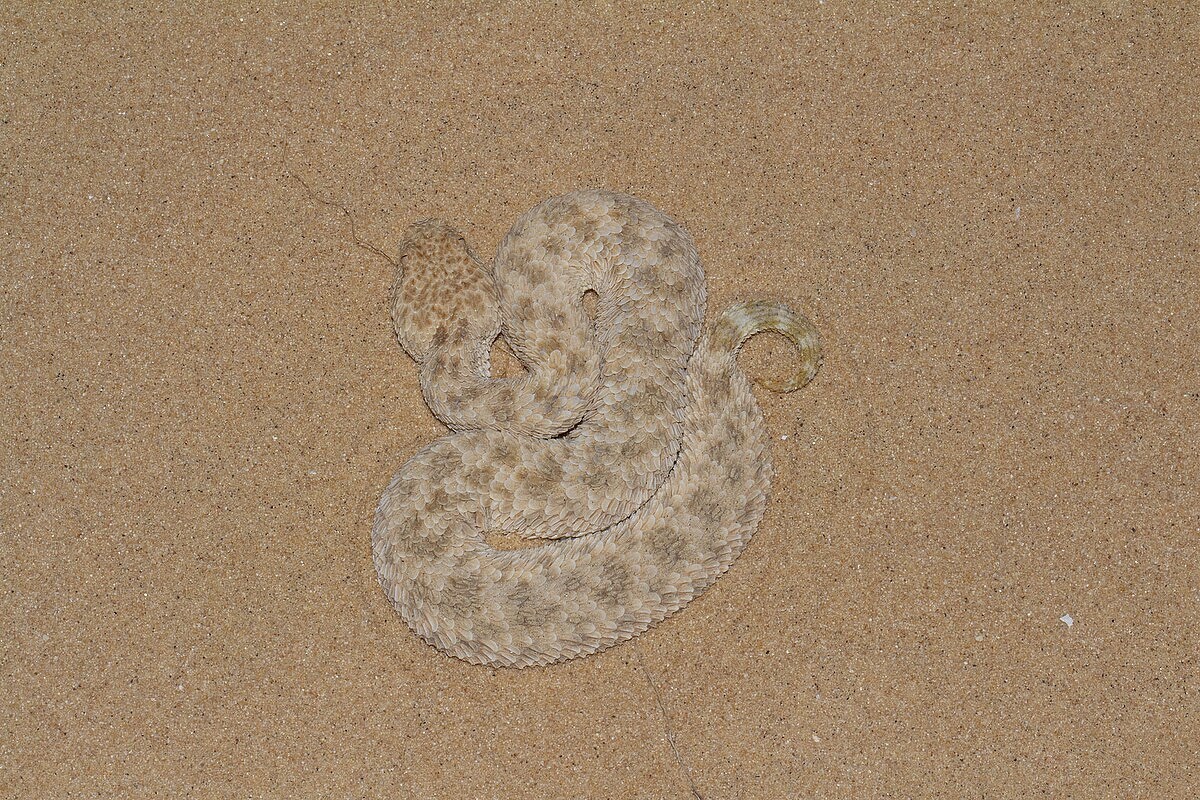
Sahara sand viper
Sahara Sand Vipers (Cerastes vipera) live in sandy and scrub desert areas in arid North Africa in Mauritania, Morocco, Algeria, Mali, Tunisia, Libya, Niger, Chad, Sudan, and Egypt, including the Sinai Peninsula, and Israel. Also known as Avicenna vipers, common sand vipers, Egyptian asps, Cleopatra's asps, sand vipers, Avicenna's sand vipers, and lesser cerastes, they are small and stout, with a broad, triangular head with small eyes set well forward where the sdes and top of the head meet. Adults average 20 to 35 centimeters (8–14 inches) in total length with a maximum total length of 50 centimeters (1.6 ft). Females are larger than males. Their hunting strategy is unique compared to other vipers, They employ both sit-and-wait ambushing and active hunting. Active hunting is predominantly used in the months right before hibernation to increase energy intake before the long dormant period.
Puff Adders (Bitis arietans) are a fat venomous snake found south of the Sahara and in parts of Arabia. Reaching lengths of 1.6 meters (five feet,) they have a bite that causes rapid, massive swelling, great pain and dizziness. The mortality rate from internal bleeding is moderate. There is an antivenom. These snakes live in grasslands, scrub brush, and around buildings and farms.
Desert Horned Viper (Cerastes cerastes) live rock outcroppings, scrub
brush and sandy areas in deserts. See Below
Levantine Vipers (Macrovipera lebetina) inhabit dry, rocky areas and farms
in mountainous areas, See Below
McMahon’s Viper (Eristicophis macmahoni) can be found in sandy deserts. See Below
Palestine Vipers (Vipera palaestinae) are usually seen around farms and buildings in stream valleys.See Below
Saw-Scaled Vipers (Echis carinatus) live Barren, rocky, and sandy
desert areas, scrub forests, and around buildings See Below
Central Asian Saw-Scaled Viper (Echis carinatus multisquamatus) rside in barren, rocky, and sandy desert areas, scrub forests, and around buildings. See Below
Sochurek's Saw-Scaled Viper (Echis carinatus sochureki) See Below
Egyptian Saw-Scaled Viper (Echis pyramidium) See Below
Palestine Vipers (Vipera palaestinae) are usually seen around farms and buildings in stream valleys. See Below
Persian Sand Vipers Pseudocerastes persicus) live in flat, sandy or rocky desert
areas. See Below
Field's sand vipers (Pseudocerastes persicus fieldi) and Persian horned viper (P. p. persicus) are two subspecies that occur in the Iraq. The Field’s sand viper occurs in western Iraq, and the Persian sand viper is found in the eastern and central portions of the country. Both subspecies prefer semi-arid conditions with combinations of sandy and rocky terrain. Persian horned viper are heavy and slow-moving. Typically nocturnal or crepuscular, it may sometimes be found resting in shrubs during daylight hours. Bites seem to be relatively infrequent. When they do occur, symptoms display a nasty blend of hemotoxic and neurotoxic effects. Kurdistan vipers (Vipera raddei kurdistanica) are montane species that prefers rocky slopes in higher elevations above 1220 meters (4,000 feet). In Iraq, they are known to occur only in a small region of the northeast.[Source: Alexander Larsen, Linked In, August 29, 2016]
Persian Horned Viper
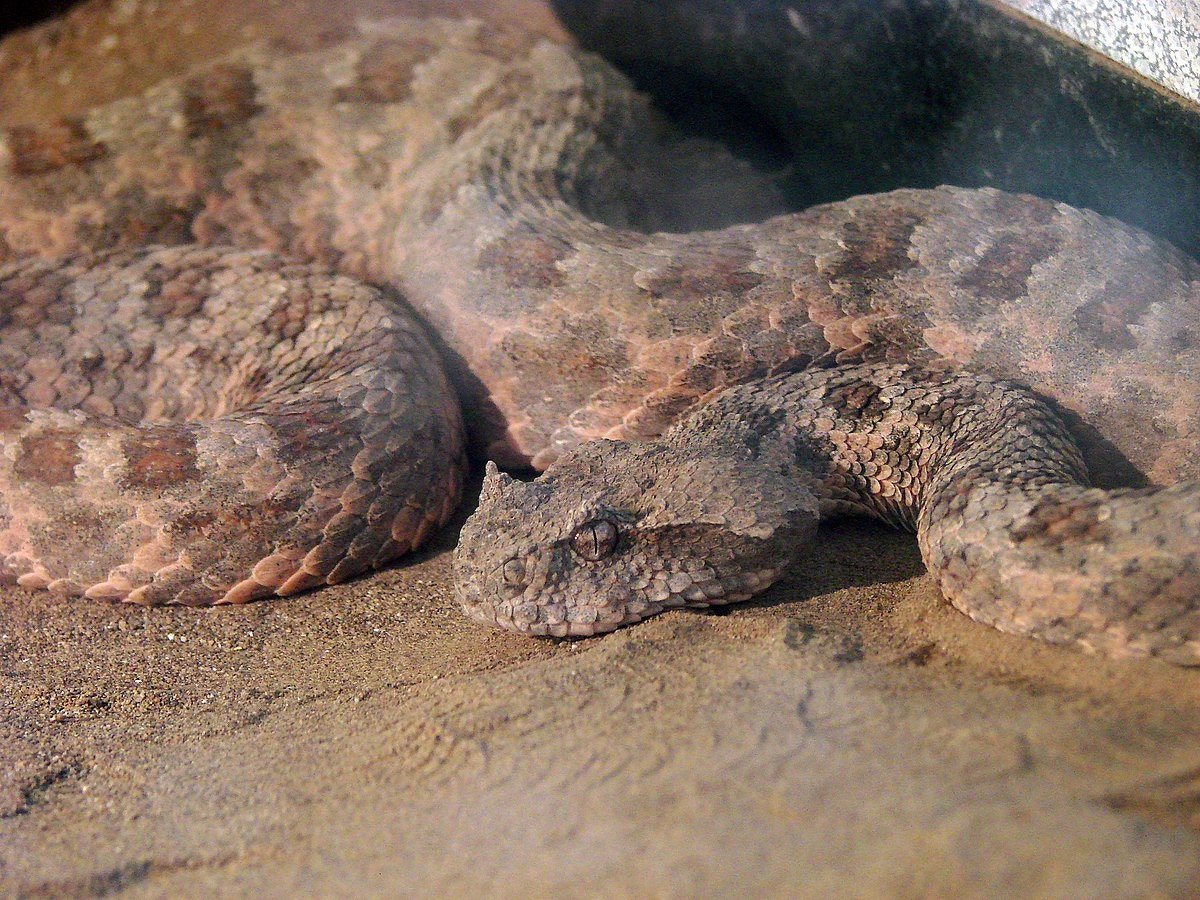
Persian horned viper
Persian horned vipers (Pseudocerastes persicus) are generally slow-moving and may employ various methods of locomotion, including sidewinding, serpentine, and rectilinear. They are almost totally nocturnal, only being seen during the day or early evening during colder periods, and is not particularly aggressive, but do hiss loudly when disturbed. Not capable of sinking into the sand vertically like Cerastes, they feed mainly on lizards, small mammals, mice and occasionally small birds and arthropods, but also eat dead food. Adults average between 40 and 70 centimeters (16 and 28 inches) in length with a maximum total length of 108 centimeters (43 inches) being reported. Females are usually larger than males. These snakes can attain a considerable weight relative to their size, with specimens sometimes exceeding 0.5 kilograms (1.1 lb). [Source; Wikipedia =; [Source: Armed Forces Pest Management Board ~]
1) Common Names: Persian horned viper, Persian desert horned viper, Persian sand vipers, eye-horned viper, horned desert viper, horned snake, shepipon, Field's horned viper, Persiche Trughornviper, False-horned viper. 2) Family: Viperidae. 3) Scientific Names: Pseudocerastes persicus, Cerastes persicus, Daboia persica persica, Pseudocerastes bicornis, P. fieldi (in part), P. persicus fieldi, P. p. persicus, Vipera persica persica. ~
Description: Medium-sized, wide-bodied viper, with blunt snout and small scale-covered horn above each eye; Body: usually pale gray or bluish-gray to khaki; with dorsal gray or brownish-gray blotches or crossbands. Alternating faint spots on throat and sides. Belly white; tail slender and black. The head is broad, flat, distinct from the neck and covered with small, imbricate scales. The nostrils are positioned on the top and side of the head and have valves. The eyes are medium in size with vertically elliptical pupils. The hornlike structure above each eye consists of small, imbricate scales and is also present in juveniles. The tail is short. ~+
Habitat: Found mainly in desert bushes, and in sandy, rocky terrain or flat sandy areas with limited vegetation, and in burrows and crevices, up to 2,000 meters (6561 feet) in elevation. Widespread in the Middle East and Southwestern Asia, they like sandy (but not sand dune) or basalt and limestone rock desert and hill country, usually with some vegetation. They tends to avoid areas of human habitation and found in Iran, Pakistan, Afghanistan, northern Oman, the United Arab Emirates, Jordan, Iraq and Syria.
Activity and Behavior: Mainly nocturnal. Usually sluggish, placid, less likely to bite during day; but dangerously active and aggressive at night. Hisses loudly (often makes typical "rustling" noise by rubbing side scales together) if disturbed, but will usually try to escape first. Often travels over sand by sidewinding. Frequently hides in rodent tunnels and underneath bushes. Feeds mainly on small mammals, and occasionally lizards. ~
Venom Characteristics: Venom varies for different named subspecies, mainly hemotoxic, possibly with neurotoxic factors. Most bites to humans produce limited envenomation, with mainly local symptoms of minor pain, mild local tingling and stiffness. Serious envenomation can cause internal hemorrhaging, extensive progressive swelling, weakness and ptosis. Victim may be conscious but can't respond due to paralysis. Reports of human envenomation fairly common, but fatalities not very common. No antivenom is available for bites from this species, although it is reported that a polyvalent antiserum does offer some protection.
Sahara Horned Vipers
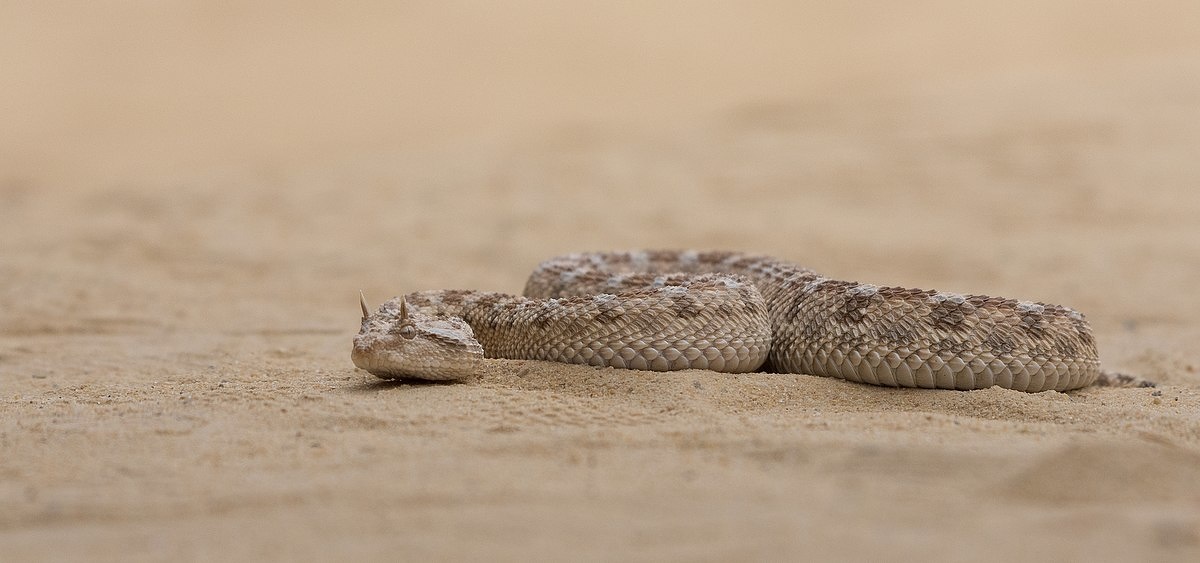
Saharan horned viper
Saharan horned vipers (Cerastes cerastes) are among the most common and easily recognized venomous snakes in North African and Middle Eastern deserts. They are also known as desert horned vipers, desert sidewinding horned vipers, North African horned vipers, African desert horned vipers, greater cerastes, asps and horned vipers and a number of local names. They are often easily distinguished from other snames by the presence of a pair of "horns" above their eyes, although hornless individuals do occur as do ones with reduced horns. Three subspecies have been described. Wall Street Journal Wikipedia]
Sahara horned vipers range across North Africa, southwestern Arabia and parts of the Middle East, including Israel. They are common in the Sahara desert, and most frequently found in Egypt, Libya, Tunisia, Algeria and Morocco but are found southward into the Sahel in Mauritania, northern Mali, Niger, northern Chad and Sudan at elevations up to 1500 meters (4920 feet). They inhabits a variety of habitats within the desert: rock hills, sandy areas, wadis, and found in dunes, but are rarely found on rock pavement and gravel plains. In the the eastern Sinai they coexists with Arabian horned vipers (Cerastes gasperettii). [Source: Issac Anderson, Animal Diversity Web (ADW) /=]
On the International Union for Conservation of Nature (IUCN) Red List Sahara horned vipers are listed as a species of Least Concern. In CITES (Convention on International Trade in Endangered Species of Wild) they have no special status. The general distribution of Sahara horned vipers is strongly influenced microclimate. They generally prefer cooler temperatures, with annual averages of 20°C or lower. Humidity is important and temperatures must be high enough for the snake to bask and obtain heat, and humid enough to retain a maximum amount of water present in the body. Their only source of water is from prey.
See Separate Article: SAHARA HORNED VIPERS: CHARACTERISTICS, BEHAVIOR AND REPRODUCTION africame.factsanddetails.com
McMahon’s Desert Viper
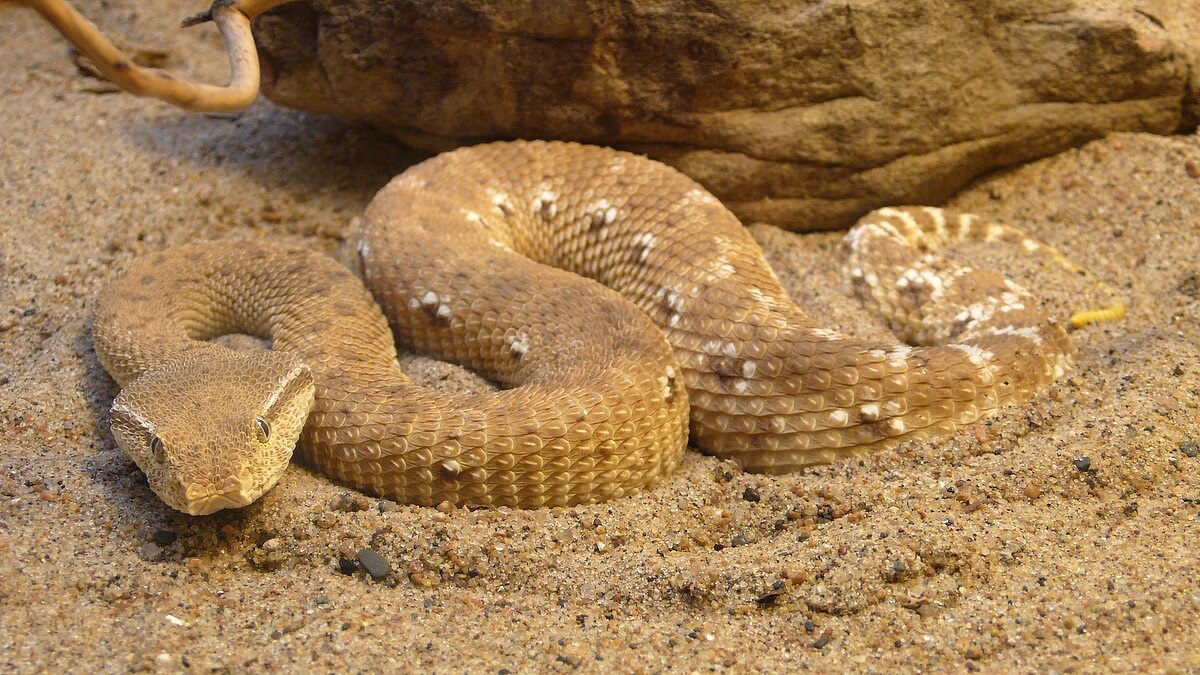
McMahon’s desert viper
1) Common Names: McMahon’s desert viper, Macmahon-viper, Asian sand viper, leaf-nosed viper. 2) Family: Viperidae. 3) Scientific Names: Eristocophis macmahoni, Eristocophis macmahonii. [Source: Armed Forces Pest Management Board ~]
Description: Small, stout-bodied, sand viper, adults usually 60-70 centimeters long (maximum 80 centimeters); Body usually pale reddish-brown, tan or khaki, with lateral rows of dark spots with pale edges. Belly may be uniform or marked with faint irregular spots. Relatively large broad head with scattered dark flecks on top. ~
Habitat: Found almost exclusively on sand dunes below 1,200 meters in elevation, in Iraq, southwestern Afghanistan, southeastern Iran, and western Pakistan. ~
Activity and Behavior: Terrestrial (semi-fossorial). Most active during twilight and at night. Alert, bad-tempered. Buries itself in sand. Resorts to sidewinding movement when hurried or alarmed. When aggitated, hisses loudly, raises head and loop of body well above ground, and strikes with great vigor. Rarely encountered. ~
Venom Characteristics: Venom shows strong hemorrhagic activity. Symptoms may include local swelling and inflammation; abdominal pain and distention; and inability to swallow and open the eyes, suggesting possible neurotoxicity. Has caused serious human envenomations and deaths. No known antivenom currently produced. ~
Saw-Scaled Vipers and Carpet Vipers
Two species of poisonous snake are both called carpet vipers and saw-scaled vipers. One version is found in Africa and South Asia while the other is found mostly in the Middle East. The latter are relatively small and well camouflaged but pack a powerful poison and can be aggressive. They tend to live in places where there are also a large number of peasant farmers, resulting in a high number of fatalities.
Saw-scaled viper (Echis carinatus) are particularly associated with the Indian subcontinent. They are also known as the Sindh saw-scaled viper, Indian saw-scaled viper, little Indian viper and by other common names. Found in parts of the Middle East and Central Asia, and especially the Indian subcontinent, they are is the smallest member of the "big four" Indian snakes that are responsible for causing the most snakebite cases and deaths, due to various factors including their frequent occurrence in highly populated regions, and their inconspicuous nature. [Source: United States Army, Center for Health Promotion and Preventive Medicine (USACHPPM), Entomological Sciences Program, Aberdeen Proving Ground, Md 21010-5403]
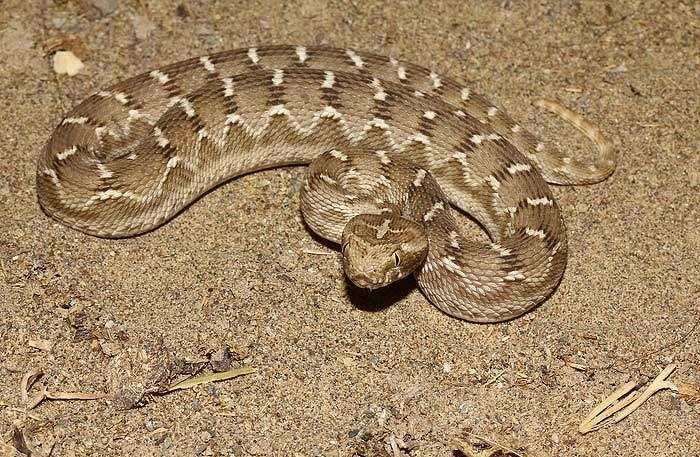
Saw-scaled viper
Saw-scaled vipers cause more human fatalities than any other snake. Reaching lengths of only 60 centimeters (two feet), their bite causes severe bleeding and fever. There is an antivenom. To ward of potential threats these snakes can produce a buzzing sound by rubbing their heavy-keeled scales against one another. The sound is sometime mimicked by a harmless egg-eating snake that occupies the same area.
Two subspecies of saw-scaled viper are currently recognized. Three others are nominate subspecies. The ones found in the Middle East are:
1) Multiscale saw-scaled viper (E. c. multisquamatus, Cherlin, 1981) range From Uzbekistan to Iran and Iraq in the south and east to western Pakistan.
2) Sochurek's saw-scaled viper (E. c. sochureki, Stemmler, 1969) can be found in Southern Afghanistan, Pakistan, northern India, southern and central Iran, Oman and UAE.
Saw-Scaled Vipers
Saw-scaled vipers (Echis carinatus) are blamed for more deaths annually than any other species in the world. They averages only about 18 to 20 inches in length and are highly variable in color and pattern. Typically they are brown or tan, although they may also be gray or reddish. The snake’s back has one to three rows of dark blotches with light centers. The snake may be striped or display a wave pattern on the sides. The most reliable way to quickly distinguish the saw-scale from other vipers in Iraq is the presence of the characteristic arrow-shaped marking on the top of the head. The bite of this snake has been known to cause massive internal hemorrhaging and bleeding from all bodily orifices. [Source: Alexander Larsen, Linked In, August 29, 2016]
Common Names: Saw-scaled viper, carpet viper, African carpet viper, Egyptian saw-scaled viper, Indian saw-scaled viper, phoorsa, Sandrassselotter, Sochurek's saw-scaled viper, Central Asian saw-scaled viper. 2) Family: Viperidae. 3) Scientific Names: Echis carinatus Echis carinata, Echis carinatus, E. c. astolae, E. c. astoles, E. c. carinatus, E. c. multisquamatus, E. c. sochureki, E. multisquamatus, E. sochureki, Pseudoboa carinata. [Source: Armed Forces Pest Management Board ~]
Description: Small, rather stout, flat, sand viper, adults avg. 20-30 centimeters long (maximum 80 centimeters); body grayish, greenish, or yellowish brown; belly white speckled with brown or black. Moveable front fangs. Series of middorsal white cross-bars edged with black and whitish zigzag along each side. Distinctive cruciform white mark on top of head (differs for each recognized subspecies). ~
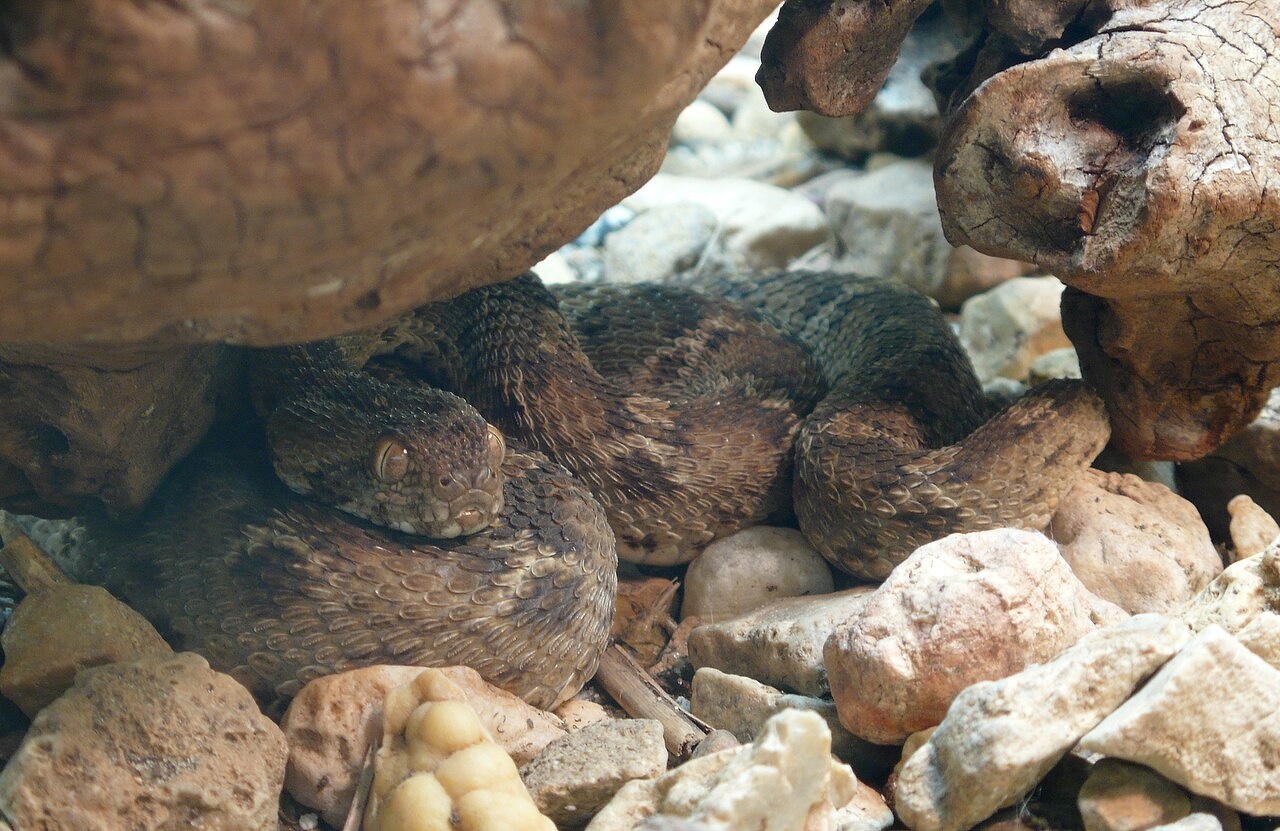
Egyptian saw-scaled viper
Habitat: Found mainly in open, dry or semi-desert areas, dry savannahs, or even forest edges. Found under small thorny plants, leaf litter, rocks, and in dry scrub jungle. Mainly found in semi-arid regions of southern Asia and the Middle East. Despite some of its common names, it does not occur in Africa. ~
Activity and Behavior: Mainly nocturnal in hot weather; often diurnal in cool weather. Mainly terrestrial (semi-fossorial; buries itself in sand) but climbs up to 2 meters into bushes. When alarmed, throws itself into double coil like a figure-8 and rubs sides of body together, producing violent rustling sounds. Very nervous; quick to strike at slightest provocation. Reportedly oviparous with usually 4-20 eggs per clutch. Main preys on lizards and small mammals. ~
Venom Characteristics: Mainly hemotoxic. Fangs rather large compared to size of snake. Common cause of snake bites in its range. Local symptoms generally include pain, swelling, and enlarged tender lymph glands. After 10-12 hours, some victims begin to bleed from gums and later develop deep-organ or cerebral bleeding (sometimes fatal). ~
RELATED ARTICLES:
VENOMOUS SNAKES IN ASIA: KRAITS AND RUSSELL'S, SAW-SCALED AND PIT VIPERS factsanddetails.com
Egyptian Saw-Scaled Viper
Egyptian saw-scaled vipers (Echis pyramidium) are a species of venomous snake also known as the Northeast African carpet vipers, Egyptian carpet vipers, and Geoffroy's carpet vipers. Endemic to Northeast Africa and the Arabian Peninsula and . Like all other vipers, it is venomous.
Egyptian saw-scaled vipers are closely related to West African carpet viper (Echis ocellatus) and both cause many snakebite deaths. Two antivenoms are available to counteract snakebites from this species: Polyvalent Anti-viper Venom by VACSERA in Egypt and SAIMR Echis antivenom by South African Vaccine Producers. [Source: Wikipedia
Egyptian saw-scaled vipers are 30 to 60 centimeters (12–24 inches) in length. They occur in Egypt, central Sudan, Eritrea, Ethiopia, Djibouti, Somalia, northern Kenya, western Saudi Arabia (south of the 18th parallel), Yemen, South Yemen (in Hadhramaut), and in Oman. Disjunct populations reportedly occur in Algeria, Tunisia, Libya, and northern Egypt. They are absent in southern Egypt.
Three subspecies are currently recognized:
E. p. aliaborri (Drews & Sacherer, 1974) in Northern Kenya
E. p. leakeyi (Stemmler & Sochurek, 1969) in Northwestern Kenya, Southwest Ethiopia
E. p. pyramidum (I.Geoffroy Saint-Hilaire, 1827) in Southern Arabia, Somalia, Ethiopia, Sudan, Egypt, Libya and Tunisia.
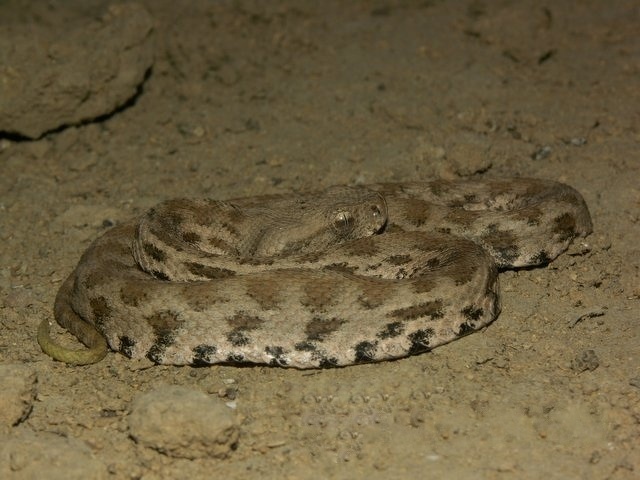
Levantine Vipers
Levantine viper
Levantine vipers (Macrovipera lebetina) are large and some say attractive species that can reach lengths in excess of two meters (six feet). Common Names: Levantine viper, Lebetine viper, blunt-nosed viper, Levantenotter, Lebetine viper, Lavantadder, Vipere lebetine, kufi. 2) Family: Viperidae. 3) Scientific Names: Macrovipera lebetina, Coluber lebetinus, Daboia lebetina, D. l. lebetina, D. l. obtusa, D. l. peilei, D. l. transmedeterranea, D. l. turanica, Macrovipera lebetina cernovi, M. l. lebetina, M. l. obtusa, M. l. peilei, M. l. transmediterranea, M. l. turanica, M. deserti, M. mauritanica, Vipera euphratica, Vipera lebetina, V. l. euphratica, V. l. lebetina, V. l. mauritanica, V. l. obtusa, V. l. peilei, V. l. schweizeri, V. l. transmedeterannea, V. l. turanica, V. mauritanica, V. obtusa, V. xanthina. [Source: Armed Forces Pest Management Board ~]
Description: Medium to large, robust snake, adults usually 70-115 centimeters long (maximum 180 centimeters); body usually light gray, khaki, or buff, to reddish-brown, with double row of opposing or alternating dorsal spots from head to tail. Dark lines usually form a "V-mark", pointing forward, on top of the head. Females usually darker, background color brownish; males usually lighter, background color grayish. Belly light gray to yellow, with small dark brown spots; tail short, tapers abruptly, underside of tip yellow. ~
Habitat: Found in a wide variety of habitats from marshes and plains at sea level to mountainous areas up to 2,000 meters in elevation. Also semi-desert areas and rocky, hilly country at moderate elevations, with scattered bushes and adequate water supply. Often near farms. Rather wide spread in southern Europe, northern Africa, the Middle East, and southern Asia. ~
Activity and Behavior: Mainly nocturnal and terrestrial. Most active and alert at night, usually very slow-moving and almost oblivious to stimuli during day, but temperament unpredictable, and may suddenly strike quickly and savagely. ~
Venom Characteristics: Venom mainly hemotoxic. Envenomation causes sharp pain at site of bite, followed by local swelling and necrosis. Numerous serious envenomations and deaths of humans reported each year. ~
Palestine Vipers
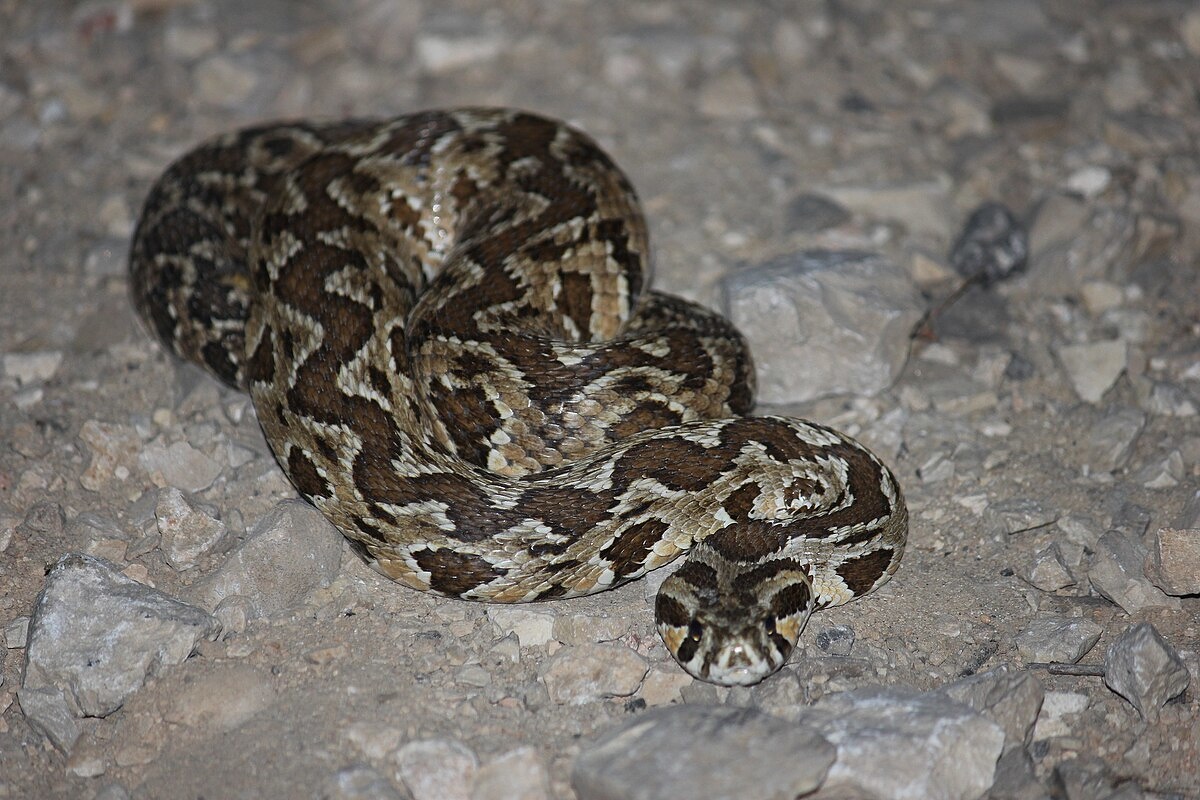
Palestine vipers (Vipera palaestinae) are usually seen in Mediterranean coastal plains, inland hills and around farms and buildings in stream valleys in northern and central Israel, Palestine, western Syria, northwestern Jordan, and Lebanon. In 2017 a specimen was found in Turkey. They are considered a leading cause of snakebite within their range. [Source: Wikipedia]
Palestine Vipers length 70 to 90 centimeters (28 to 35 inches) in length, with a maximum length of 130 centimeters (51 inches). The head is triangular, distinct from the neck and covered by small scales. The upper part of the body is colored by large dark rhomboid blotches sometimes forming a zig-zag pattern. The harmless coin-marked snake, which lives in the same areas as the Palestine viper, resembles it in length, coloration and defensive behavior, to the extent that people frequently get confused between them. This is probably a case of Batesian mimicry.
Palestine viper
The LD50 of this viper's venom is 0.34 milligrams per kilograms. There is an antivenom that is considered safe and effective but occasionally people still die from this snake's bite. The mortality rate of people who were bitten is 0.5 percent to 2 percent. At least 7 people have died from of this snake's bite since 2000 in Israel so far. The venom includes at least four families of pharmacologically active compounds: 1) neurotoxins; 2) hemorrhagins; 3) angioneurin growth factors; and 4) different types of integrin inhibitors.
The mating season for Palestine Vipers is May. Unlike most other vipers, who are viviparous,[ they are oviparous and lays eggs around Augus, with the eggs hatching one and ahlf to two months after that. Young snakes can bite and kill prey with a developed venom apparatus.
Some modern scholars have identified the Tsefa (Zefa) snake mentioned in the Hebrew Bible as the Palestine Vipers. This snake was probably mentioned in a list of venomous snakes in ancient Egypt, that appears in the Brooklyn Papyrus from the first millennium B.C. The code phrase “Nahash Tsefa” (Viper Snake) was broadcast on the radio and TV to instruct Israeli citizens to put on their gas masks during missile attacks from Iraq against Israel, in the first Gulf War in 1991. In the Israeli Air Force the Bell AH-1 Cobra helicopter was named Tzefa. The IDF's paratroopers battalion #202 is called Tzefa Battalion.In 2018 the viper was declared Israel's national snake.
Mole Vipers
Mole vipers are venomous snake that spend much of their time undergound, hence their name. They have a small head that is not distinct from the body and long hinged fangs that can be extended laterally when mouth is closed. The eyes are very small, pupils are round and the snout is pointed, broad, flattened. Arabian mole vipers (Atractaspis microlepidota andersoni) and Oasis mole vipers (Atractaspis engaddensis) live in burrows under rocks, concrete slabs, logs or planks in moist areas near oases and around farms. [Source:United States Army, Center for Health Promotion and Preventive Medicine (USACHPPM), Entomological Sciences Program]
Israeli mole vipers(Atractaspis engaddensis) are found Israel, Jordan, Saudi Arabia and the Sinai Peninsula in Egypt. Extremely venomous and dangerous, they are usually dark black in color and are approximately 60 to 80 centimeters (23.6 to 31.5 inches) long. The head and the tail are short and pointy and hard to distinguish from each other. As a defense these snales roll themselves up so their tail and head are hidden under their body. [Source: Wikipedia]
Israeli mole vipers are mainly active mainly at night, and is found in arid or semi-arid desert areas. They prefer to hatchling snakes but can also eat lizards and small mammals like young rodents. Their fangs are able to be directed outside of its mouth, giving these snakes the ability to side stab with a closed mouth. This makes capturing this snake particularly dangerous because it can unexpectedly bite sideways even when it is captured by the head to lock its mouth. This happened to the zoologist Heinrich Mendelssohn when he first discovered this species and captured a snake of this species in 1944.

desert cobra
There is currently no available antivenom for Israeli mole vipers. The venom has a very high lethal potency, with an i.v. LD50 of 0.06-0.075 micrograms per gram body weight in mice. The action of the venom is rapid and death results from seemingly neurotoxic effects. Three isotoxins, named sarafotoxins S6a1, S6b and S6c, with strong cardiotoxic activity have been isolated from the venom. However, even at high concentrations, the venom does not block contractions of skeletal muscles that are directly or indirectly stimulated. The most prominent action of the venom is seen in the function of the heart in anesthetized mice, with or without artificial respiration. The changes observed in the ECG are similar to those recorded in human victims and are the result of an A-V block that is caused by an apparent direct action of the venom on the heart."
Thankfully, Israeli mole vipers have relatively little interaction with humans because they dwell mostly in desert areas, underground. They are also relatively non-aggressive and slow to react even when bothered. Also, despite its strong venom, and the lack of an antivenom for it, in most cases people survive their bite with little or no long term damages. Even small children can survive a bite with a proper treatment. This is primarily because the snake’s fangs cannot penetrate very deep beyond the skin. Fatal bites are very rare. Only two or three have been recorded fatal since the snale was discovered. The latest death occurred in 2002 when a man tried to capture a snake near his house on the border of the Judean Desert.
Desert Cobras
Desert cobras (Walterinnesia aegyptia) are also known as the desert black snake. Belonging to the family Elapidae, they are native to the Middle East and found in southern Israel, north-western Saudi Arabia, western Jordan, Iraq, Egypt’s Sinai Peninsula and possibly Lebanon. This is the commonest and most widespread cobra in the Middle East. Non-native cobra are sometimes imported for showman activities.
Like most cobras, desert cobras are easily adaptable to various habitats. But locations occupied by humans are particularly fancied by them as there are good places to shelters and rodents are often in abundance. While these glossy snakes does not actively seek confrontation, they can move with lethal speed towards a threat when provoked.
Desert cobras are highly venomous. Like many elapid snakes, the venom is primarily neurotoxic and the effects of envenenomation are due to systemic circulation of the toxins rather than from local effects on tissue near the site of injection. The subcutaneous LD50 for the venom of desert cobras is 0.4 milligrams per kilogram. For comparison, the Indian cobra's (Naja naja) subcutaneous LD50 is 0.8 milligrams per kilogram, while the Cape cobra's (Naja nivea) subcutaneous LD50 is 0.72 milligrams per kilogram. This makes the desert black snake a more venomous snake than both. Venom toxins of the desert cobra are similar to those of the king cobra (Ophiophagus hannah), indicating a close relationship.
RELATED ARTICLES:
COBRAS: CHARACTERISTICS, VENOM, BITES, TREATMENTS factsanddetails.com
COBRAS IN ASIA: SPECIES, CHARACTERISTICS, VENOM factsanddetails.com
INDIAN COBRAS: CHARACTERISTICS, BEHAVIOR, VENOM, BITES factsanddetails.com
KING COBRAS: CHARACTERISTICS, BEHAVIOR, VENOM, HUMANS factsanddetails.com
COBRAS AND HUMANS: FESTIVALS, SNAKE CHARMERS, ATTACKS factsanddetails.com
Arabian Cobra
Arabian Cobra
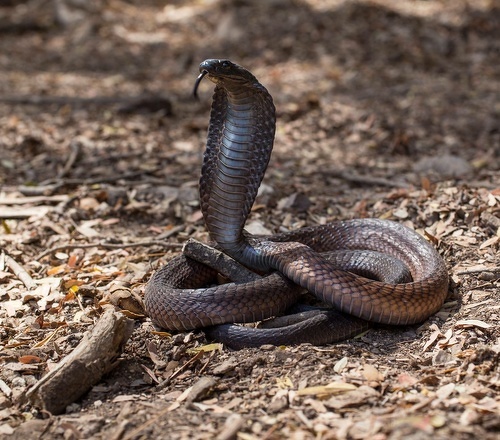
Arabian Cobra (Naja arabica) are native to the Arabian Peninsula, including western and southern Saudi Arabia, Yemen, and Oman. This species had long been considered a subspecies of the Egyptian cobra (Naja haje), but morphological and genetic differences have led to its recognition as a separate species. [Source: Wikipedia]
Arabian cobras have a long, robust body and can measure up 2.5 meters (8 feet) in length. They are distinguished by their solid gold, yellow, or light brown coloration. Cervical ribs along the neck form the hoods for which cobras are known. Arabian cobras triangular head and round, dark eyes. [Source: Animals A-Z]
Cobra venom is a potent mix of neurotoxins and cytotoxins. These toxins can cause a range of symptoms, including swelling, pain, dizziness, paralysis, and potentially death. The venom primarily targets the nervous system, leading to paralysis, and can also damage body cells. Neurotoxins interfere with the transmission of nerve impulses, causing paralysis, and potentially respiratory failure. Neurotoxins in the venom block the binding of acetylcholine at the neuromuscular junction, causing paralysis. Cytotoxins damage cells, leading to swelling, pain, and tissue damage at the bite site. The venom can also cause other systemic effects, including potential cardiac damage and bleeding. Antivenom is needed for the best treatment.
Egyptian Cobras
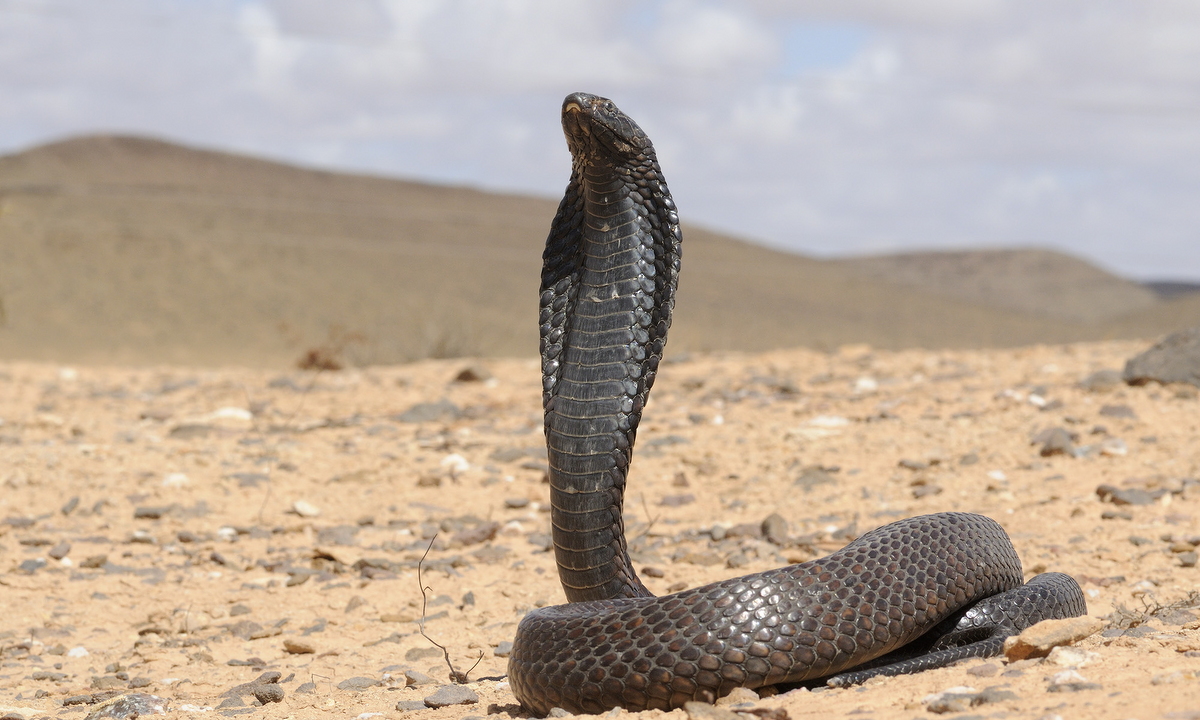
Egyptian cobras (Naja haje) are one of the most venomous species of snakes in North Africa. Found across much of Sahara region, excluding the most barren desert and south to the Congo Basin. and east to Kenya and Tanzania, they are a large species of snake, averages roughly 1.4 meters (4.6 feet) in length, with the longest specimen recorded being 2.6 meters (8.5 feet). Older literature records them in the Arabian Peninsula but is when Arabian cobras were believed to be subspecies of Egyptian cobras. The color of Egyptian cobras is highly variable, but most are some shade of brown, often with a "tear-drop" mark below the eye. Some are more copper-red or greyish-brown. Individuals from Morocco are almost entirely black. The undersides of these snakes is mostly a creamy white, yellow brown, grayish, blue grey, dark brown or black, often with dark spots. [Source: Wikipedia]
The head is of Egyptian cobras is large and depressed and slightly distinct from the neck. Like all cobras, their neck has long cervical ribs capable of expanding to form a hood. The snout of Egyptian cobras is moderately broad and rounded. The eyes are relatively large with a round pupil. The body of the Egyptian cobra is cylindrical and stout, with a long tail. The length is largely dependent on subspecies, geographical locale, and population. The most recognizable characteristics of this species are its head and hood. Unlike some other African cobras (for example, the red spitting cobra), Egyptian cobras do not spit venom.
Egyptian cobra
Egyptian cobras are terrestrial (ground-dwelling), nocturnal (active at night) and crepuscular (active at dawn and dusk), but are sometimes seen basking in the sun early in the morning. The tend have a permanent home base in abandoned animal burrows, termite mounds or rock outcrops. They are active hunters, sometimes entering human habitations, especially when hunting domestic fowl. Like other cobra species, they generally try to escape when approached, but if a human or potential threats gets too close — a few meters — it assumes the typical upright posture of a typical cobra, with their hood expanded, and strikes. The primary prey of Egyptian cobras is toads, but they prey on small mammals, birds, eggs, lizards and other snakes.
Cobras were an important symbol of the ancient Egyptians. A cobra was on the headdress of the pharaoh and appears often in art and religious imagery. Egyptian cobras were represented in Egyptian mythology by the cobra-headed goddess Meretseger. A stylised Egyptian cobra — in the form of the “uraeus” representing the goddess Wadjet — was the symbol of sovereignty for the Pharaohs.
Egyptian Cobra Venom
The venom of the Egyptian cobra consists mainly of neurotoxins and cytotoxins. The average venom yield is 175 to 300 milligrams in a single bite, and the murine subcutaneous LD50 value is 1.15 mg/kg. However, Mohamed et al. (1973) recorded LD50 (mice) values of 0.12 milligrams per kilogramand 0.25 milligrams per kilogramvia intraperitoneal injections of specimens from Egypt. Venom toxicity differs according to different geographical locations, ranging from 0.08 milligrams per kilogram to 1.7 milligrams per kilogramvia intravenous injections on mice. Egyptian cobras from northern Africa, particularly those in Egypt, Tunisia, Algeria and Libya, have significantly more potent venom than those found in Sudan and West Africa.
The venom affects the nervous system, stopping the nerve signals from being transmitted to the muscles and at later stages stopping those transmitted to the heart and lungs as well, causing death due to complete respiratory failure. The bite causes local pain, severe swelling, bruising, blistering, necrosis and variable non-specific effects which may include headache, nausea, vomiting, abdominal pain, diarrhea, dizziness, collapse or convulsions along with possible moderate to severe flaccid paralysis.
Most ancient sources attribute the deaths of the Egyptian queen Cleopatra and her two handmaidens to the bite of an Egyptian cobra after the fall of Egypt and the defeat of Anthony and Cleopatra to Octavian. The snake was reportedly smuggled into her chambers in a basket of figs.Plutarch wrote that Cleopatra had experimented on condemned prisoners with various poisons and snake venoms, finding aspis venom to be the most painless of all fatal toxins. In Ptolemaic Egypt, the term "aspis" (an ancient Greek word referring to a wide variety of venomous snakes) was most likely an Egyptian cobra. The cobra bite story has been questioned in recent years, namely because they are relatively large size snakes, making it difficult to hide one in a basket of figs and because Egyptian cobra venom is slow-acting and does not always cause death.
See Separate Article: CLEOPATRA (69-30 B.C.): LOOKS, SEX LIFE, FAMILY AND DEATH africame.factsanddetails.com
In July 2018, Aref Ghafouri — a Turkish-Iranian illusionist who won the Merlin Award — was bitten by an Egyptian cobra while preparing for a show in Turkey. He was treated antivenom and made a full recovery. In 2006, a pet Egyptian cobra escaped its terrarium and forced the evacuation of a house in Toronto for more than five months when it was believed to have sought refuge in the home's walls. The owner of the snake was fined $17,000 and jailed for a year.
Image Sources: Wikimedia Commons
Text Sources: Animal Diversity Web animaldiversity.org ; National Geographic, Live Science, Natural History magazine, CNTO (China National Tourism Administration) David Attenborough books, New York Times, Washington Post, Los Angeles Times, Smithsonian magazine, Discover magazine, The New Yorker, Time, BBC, CNN, Reuters, Associated Press, AFP, Lonely Planet Guides, Wikipedia, The Guardian, Top Secret Animal Attack Files website and various books and other publications.
Last updated May 2025